
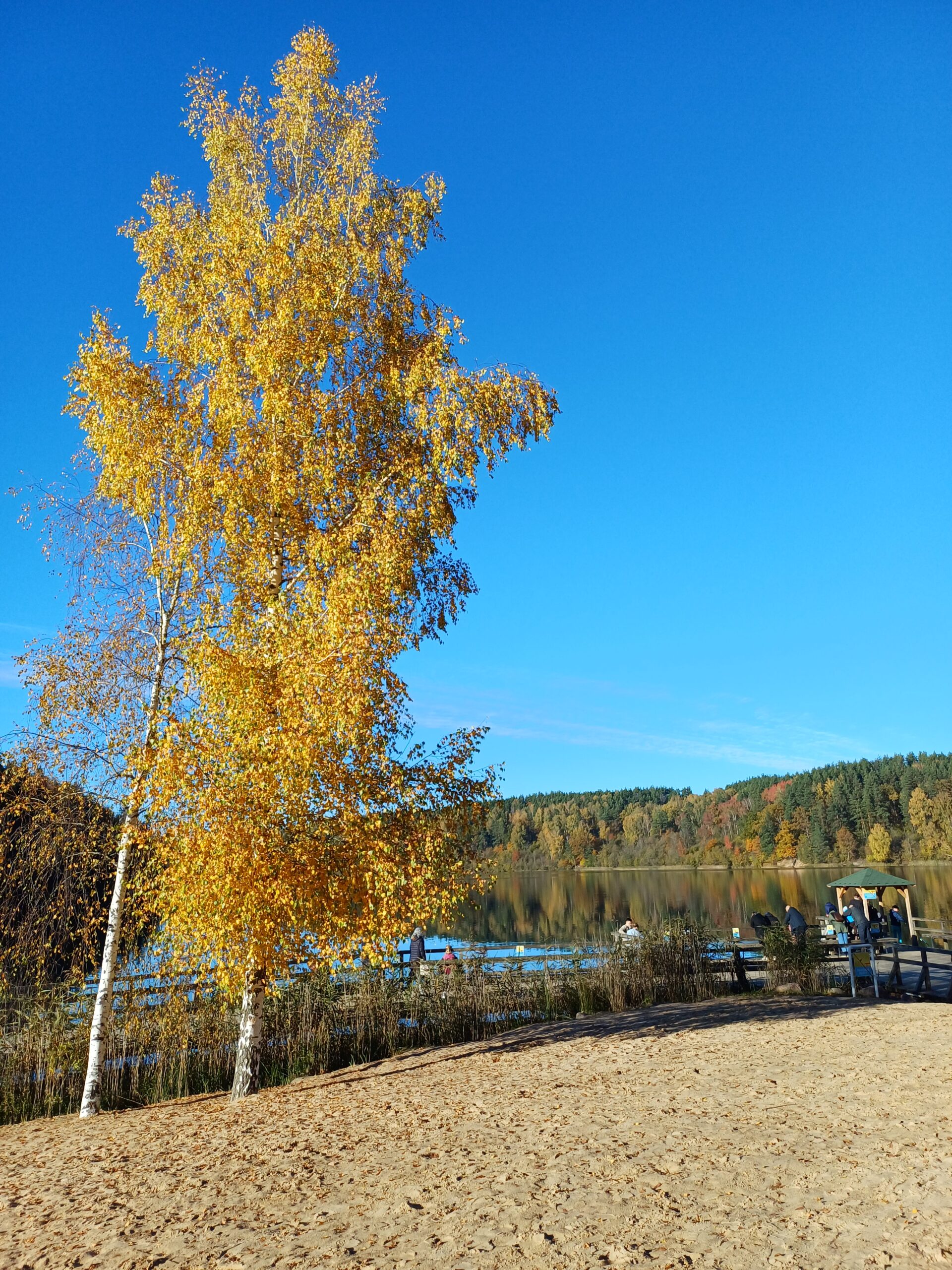
This autumn feels different from others. The colours seem deeper, the air smells more intense. At the same time, everything feels faster. Everything feels like more. The days seem shorter, the schedule is full. Before I finish reading one book, I am already starting another. I plan new courses, rush into new hobbies and experiences. It is hard to stay still when everything around me seems to be moving.
When I talk to my clients, one thing comes up again and again lately: it takes a great deal of effort to focus and stay focused on something. There is so much content around, so many options and opportunities for reading, watching, eating, travelling to or otherwise consuming. And each option claims to be the best one for us. Sometimes, we find ourselves scrolling endlessly, glued to screens, moving from one possibility of entertainment to the next, overwhelmed by the pressure of making the best choice.
This happens not only “on screens”. In everyday life, we also happen to run from one thing to another. A new hobby that an influencer seems to love suddenly feels like something we should be doing, too. A new coat catches our eye because it is fashionable this season. We consider a new relationship because the current one feels not quite right (and sometimes, it genuinely isn’t, don’t get me wrong). And I could go on.
The problem is that nothing seems to stick. Nothing stays and nothing quite fills the void. So we begin another hunt for dopamine, another search for the thing that will finally make us feel satisfied. I wonder whether this behaviour might be a kind of scrolling pattern, but in real life.
I see it in my clients, but I am not immune to it myself. A friend of mine has started swimming lessons and describes this experience as life changing. Maybe I should try that too? I also want that euphoric feeling, that promise of change. It is tempting to imagine how deeply satisfying, maybe even transformative, this new experience might be for me, just as it seems to have been for my friend. Meanwhile, it has become increasingly difficult to keep showing up at the climbing gym, where I have been going for the past year. Especially now, when I haven’t seen much progress. Perhaps a new activity, such as swimming, could give me that feeling of progress and satisfaction that has been missing lately?
But this new activity, along with the phantasy I project onto it, exists mostly in my imagination, where it can hold all the promise of transformation. The climbing gym, by contrast, confronts me with my actual experience: the slow progress, the effort, the frustration. Not fun.
These quick fixes tend to come to mind when it becomes difficult to stay with the discomfort of the present. When I feel stuck, when there is no visible progress, when I feel low or demotivated, I start thinking about all the things I could do next, all the things I should do next. Perhaps one of them will bring the transformation I am looking for. But this restlessness in me comes from a sense of lack rather than genuine curiosity. And whenever I feel it, whenever I start thinking that I should close one chapter and open a new one, I try to ask myself: where is this desire coming from?
Therapy can bring us face to face with the same discomfort. At times, progress may seem to have stalled. We may feel that we are going in circles or that the painful experiences we are exploring would be better left alone. Why keep looking at them? And sometimes, clients choose to end therapy without addressing this discomfort with their therapist or exploring what is happening between them. They might move on to what they hope will be another quick fix: medication, a different therapist, a trip abroad, a new relationship.
Of course, therapy does not work for everyone in the same way and sometimes changing therapists, seeking medical support, travelling or leaving a relationship really is the right decision. We all have the right to look for what helps us and to choose what feels right for us. But I also wonder, whether nowadays we are increasingly inclined to respond to anything uncomfortable, anything that creates friction, by moving on as quickly as possible.
As we seem to be losing our patience for discomfort, friction, for things that don’t come easily and require sustained effort, reading long texts like this can be difficult for many of us today. So take a breath and bear with me for a little longer 🙂
Just as we have learnt to live with less friction, relying on quick fixes and immediate rewards, we can also learn to do things differently. We can practise tolerating the discomfort of reading a longer text. We can stay with the discomfort of therapy long enough to explore it, rather than immediately deciding that it isn’t working. We can accept that learning to do a handstand may take months rather than a day. We can allow ourselves to get to know someone new slowly, without rushing to decide within the first few days whether they are the right person for us.
At the same time, not every difficult thing is worth persevering with. Not every uncomfortable experience is a sign that we should stay. Sometimes discomfort tells us that something needs to change. But sometimes, it is simply part of the process of learning, growing, connecting and doing something that matters to us.
Autumn is a time of letting go, of preparing for winter, of allowing things to slow down. Perhaps we can use this season to turn our attention towards the things that do not offer immediate gratification: the things that take time to grow, the skills that require months or years of practice, the relationships that deepen gradually and the inner work whose progress may not be visible for a long time.
While nature itself is preparing for the stillness of winter, I invite you to make room for those things, too. Not only the things that reward us immediately, but also the things that ask us to be patient, to keep showing up and to trust a process the outcome of which we cannot yet see.