
For as long as I can remember myself, I have been afraid of falling. Not just falling, but falling and hurting myself. While other kids skated, rollerbladed or climbed trees, I stayed away from those activities. I was careful and guarded. In my mind, falling and injury were inseparable, so the solution seemed obvious: don’t fall. And for the most part, it worked. I avoided falling.
It’s not that my life lacked adventure, it simply took a different shape. I was a creative child and spent hours immersed in imagination, building entire worlds where physical danger didn’t exist. Later in life, I travelled across the world. Some of the places I lived and worked in were objectively dangerous: active conflict zones where bombs sometimes fell.
But not me.
Which made this fear of falling strangely specific. I was never particularly afraid of danger itself, or even of physical pain in general. Yet the idea of falling, hitting the ground and getting hurt remained very scary.
For a long time, I tried to understand why. What was this fear trying to tell me? Why did it stay with me all those years?
I’m still not sure if I have an answer. Perhaps there isn’t one. Perhaps the point is not always to understand your fears, but to slowly change your relationship with them. And to do that not through analysis (although my sense making brain would love so), but through experience.
Maybe that’s why, over the last few years, I found myself drawn to activities where falling is part of the deal. Two years ago, I went to a climbing gym for the first time. I was terrified. For the first six months I climbed only on the lower section of the wall or did not climb at all, just sat and watched others do. While on the wall, I never reached for any handhold that was high up, unless I was absolutely certain I would not fall.
But of course, nothing in life comes with that kind of certainty.
Still, I kept coming back to the climbing gym. And sometimes I fell. Safely. Onto the mat or held by the rope.
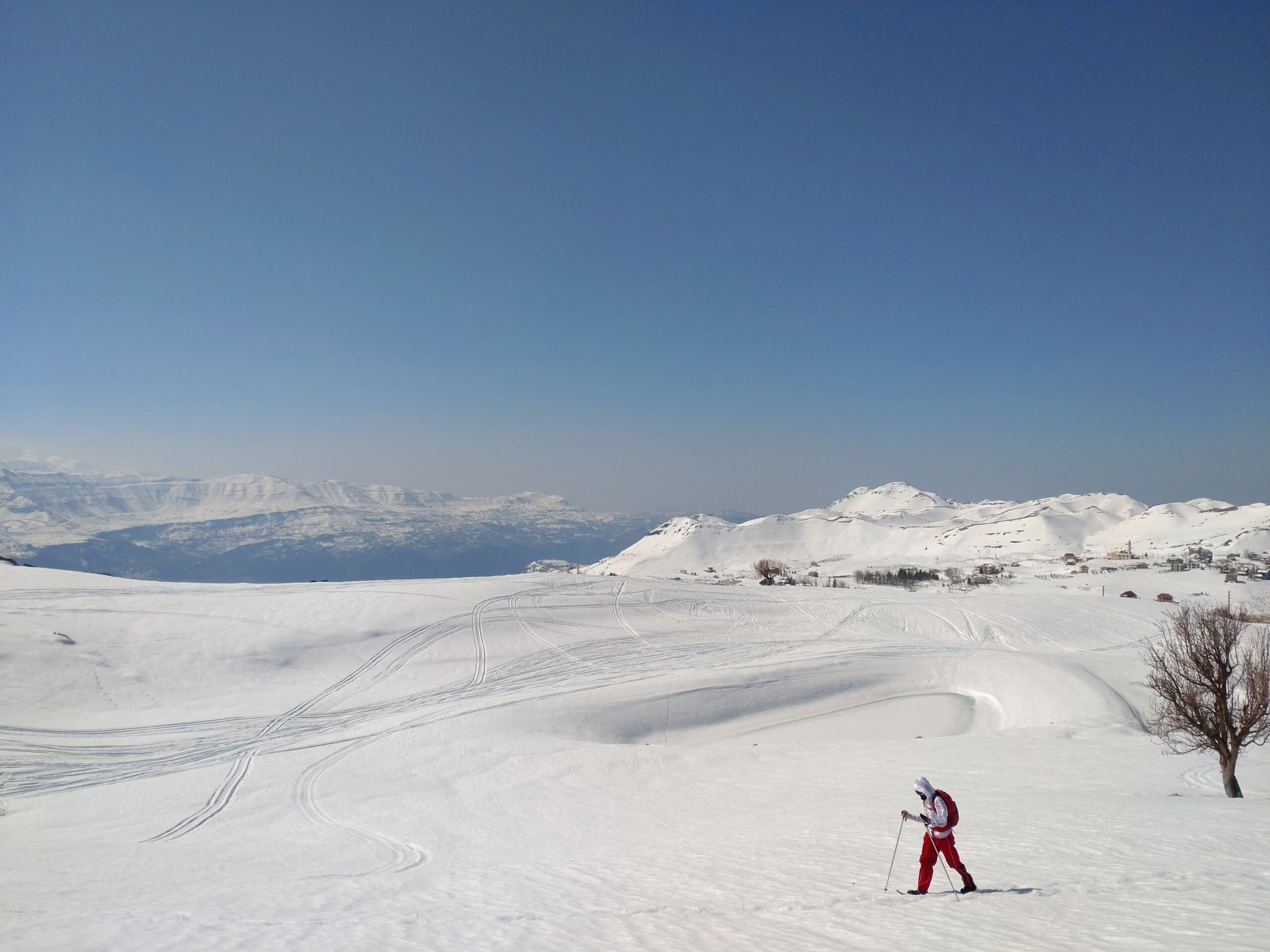
Couple of weeks ago I went skiing for the first time in my life. My mind was obsessed with one thought only: what if I fall? What if I break something? What if I’m in pain?
And then the very first thing I did when I started skiing down the beginner slope… was fall. There was no real reason for that though. I did not lose my balance. I did not encounter any obstacle. No one crossed my path. The fear itself became simply too overwhelming. It filled the entire moment and in a strange way, I surrendered to it.
So, I fell intentionally, my body stopping itself before the feared real fall could happen.
Later I kept thinking about that moment. Was that helplessness? Or was it power?
I could see that moment as helpless surrendering, giving into the fear, loosing against it before actually trying to win it over. But I can also see it as facing it or meeting it in my own terms, not waiting for it to happen to me. And something interesting happens when our fear finally meets reality. When we face it, even clumsily, even imperfectly, it shrinks. The fear loses its monopoly on imagination. It becomes just another experience.
Every time I go back to the climbing wall, I am still afraid of falling. I am nowhere near the level of many other climbers. For me, every climb still contains a small negotiation with fear.
But I keep coming back and take my own small steps. Slowly, I am learning something I never understood as a child watching other kids skating, rollerblading or climbing trees.
Sometimes the goal is not to avoid falling. Sometimes the goal is simply to keep climbing anyway.
And the moment we stop avoiding, even if we’re still terrified, we’ve already begun to change our relationship with fear.
Perhaps this is true beyond climbing walls and ski slopes. Many of the fears we carry are not meant to be solved all at once. They are meant to be approached slowly, carefully, with curiosity and support. This is also what psychotherapy often becomes: a space where we can safely explore the fears that shape our lives. When imagined catastrophes slowly meet lived experience, then the new possibilities begin to appear.